


Story of Boroline
Our journey began around 1929.
It was the happy outcome of the heady nationalistic wave that had engulfed all Indians during pre-independence era. Gour Mohun Dutta, an importer of foreign goods, decided to join the Swadeshi Movement.
A practical patriot, he was convinced that the best way to help India was to contribute to her economic self-sufficiency. To actively do this, he decided to manufacture products of a quality equivalent to their foreign counterparts. It was a daunting task. Many dissuaded him against this venture. But Gour Mohun Dutta followed his heart.
With a glorious dream of free and self-sufficient India in his heart, he started manufacturing products to compete with foreign ones, in his own house…one of them would be the legendary green tube, Boroline.

Know how Gour Mohan Dutta created Boroline
Gour Mohan Dutta, founder of Boroline, was born on 21 April 1909 into a respected Bengali merchant family. His grandfather Sambhu Dhan Dutta, was an established businessman residing in Sukchar near Barrackpore cantonment and on the outskirts of Calcutta — then the capital of British India.
A Childhood in Revolutionary Times
Gour Mohan was born during an age of revolutions. In 1905, Lord Curzon partitioned Bengal into East Bengal and West Bengal. This move triggered the historic Banga-Bhanga Andolan (Anti-Partition Movement) and the Swadeshi and Boycott movements.
Bengal became the nerve centre of India’s struggle for independence. People across the province united against what they saw as a deliberate attempt to weaken the nationalist movement.
 Gour’s early memories got embedded with what his innocent eyes saw around him. Secretive huddles in the ‘para’ corners, fiery speeches arousing everyone, the elders regularly going out and joining protest marches. The ladies of the house and neighbourhood piled up the British clothes and set fire to them. Police vans swept in and carried away his uncles in the dead of night, and the child saw the evident signs of torture when their unconscious, bruised bodies were pushed out of the vans at ‘Sukchar mor’.
In 1911, when Gour was just two years old, mounting public agitation, strikes and economic pressure forced Lord Hardinge to annul the Partition of Bengal. The province erupted in celebration — a powerful lesson in the strength of collective resistance.
Education and Early Influences
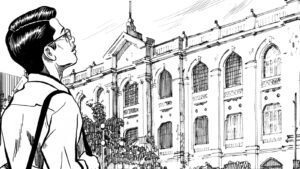 During this time, a young revolutionary named Radhakanta established an independent school in Sukchar. His aim was to nurture young minds free from colonial servility. Sambhu Dhan enrolled young Gour in this institution. Intelligent and quick to learn, Gour completed his schooling ahead of his age.
From his beloved “Mastarmoshai”, he learnt how the mighty British Empire had been compelled to bow before the Swadeshi movement. These formative years instilled in him a deep belief in self-reliance — the conviction that true strength lay in making indigenous products of superior quality - “Make in India”.
Entrepreneurial Beginnings & the seed of the BOROLINE FORMULA
After completing his education, Gour left Sukchar and started working on his own business in Burrabazar, British Calcutta’s wholesale mandi. Through his firm, G. Dutta & Co., in Bonfield Lane, he dealt in imported goods, particularly medicines from Britain.
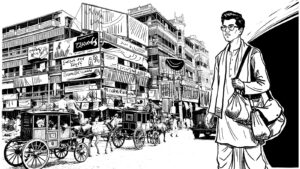 One such product was a British petroleum jelly based ointment containing 10% Boric with the trade name Borofax. White petroleum jelly was also available in the open market. Gour saw potential in it — but he envisioned something better. He wanted to create a superior formulation of this cream and offer it to his countrymen at a fraction of the cost of imported creams.
Realising that white petrolatum could be easily melted, he began experimenting at home, carefully blending additional beneficial ingredients to enhance its healing properties.
Guidance from Acharya Prafulla Chandra Roy
In 1914, Rajabazar Science College was established. Six years later under the leadership of Sir Asutosh Mukherjee and Acharya Prafulla Chandra Roy, India’s first Department of Applied Chemistry for postgraduate research began there. The stars had aligned.
 In 1928, at the age of nineteen, Gour Mohan gathered the courage to approach Acharya Prafulla Chandra Roy at Rajabazar Science College, located just two kilometers from his rented residence at Balak Dutta Lane. Lacking formal training or a degree in applied chemistry, he was very sure he will be asked to leave.
To his utter surprise Acharya Prafulla Chandra gave him a patient hearing. Impressed by Gour Mohan’s self- practiced knowledge based product development, resilience and single-minded pursuit of purpose, the Acharya took the 19-year-old under his aegis. He gave him guidance on how to go about with the development.
 The Birth of Boroline
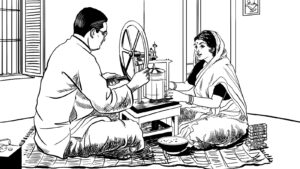
After another year of dedicated research and refinement, Gour Mohan perfected his formulation. In 1929, he began making the cream at home, assisted by his young wife Kamala Bala. The product was packaged in a distinctive green container.
He called it Boroline — a homegrown remedy born from patriotism, perseverance and scientific guidance. In 1930, Gour Mohan Dutta got patent for Boroline and another self-developed product Asmolin, registered.
Story of Boroline
Our journey began in 1929.
It was the happy outcome of the heady nationalistic wave that had engulfed all Indians during pre-independence era. Gour Mohan Dutta (1909–1956), an importer of foreign goods, decided to join the Swadeshi Movement.
A practical patriot, he was convinced that the best way to help India was to contribute to her economic self-sufficiency. To actively do this, he decided to manufacture products of a quality equivalent to their foreign counterparts. It was a daunting task. Many dissuaded him against this venture. But Gour Mohan Dutta followed his heart.
With a glorious dream of free and self-sufficient India in his heart, he started manufacturing products to compete with foreign ones, in his own house…one of them would be the legendary green tube, Boroline.
Know how Gour Mohan Dutta created Boroline
Gour Mohan Dutta, founder of Boroline, was born on 21 April 1909 into a respected Bengali merchant family. His grandfather Sambhu Dhan Dutta, was an established businessman residing in Sukchar near Barrackpore cantonment and on the outskirts of Calcutta— then the capital of British India.
A Childhood in Revolutionary Times
Gour Mohan was born during an age of revolutions. In 1905, Lord Curzon partitioned Bengal into East Bengal and West Bengal. This move triggered the historic Banga-Bhanga Andolan (Anti-Partition Movement) and the Swadeshi and Boycott movements.
Bengal became the nerve centre of India’s struggle for independence. People across the province united against what they saw as a deliberate attempt to weaken the nationalist movement.
Gour’s early memories got embedded with what his innocent eyes saw around him. Secretive huddles in the ‘para’ corners, fiery speeches arousing everyone, the elders regularly going out and joining protest marches. The ladies of the house and neighbourhood piled up the British clothes and set fire to them. Police vans swept in and carried away his uncles in the dead of night, and the child saw the evident signs of torture when their unconscious, bruised bodies were pushed out of the vans at ‘Sukchar mor’.
In 1911, when Gour was just two years old, mounting public agitation, strikes and economic pressure forced Lord Hardinge to annul the Partition of Bengal. The province erupted in celebration — a powerful lesson in the strength of collective resistance.
Education and Early Influences
During this time, a young revolutionary named Radhakanta established an independent school in Sukchar. His aim was to nurture young minds free from colonial servility. Sambhu Dhan enrolled young Gour in this institution. Intelligent and quick to learn, Gour completed his schooling ahead of his age.
From his beloved “Mastarmoshai”, he learnt how the mighty British Empire had been compelled to bow before the Swadeshi movement. These formative years instilled in him a deep belief in self-reliance — the conviction that true strength lay in making indigenous products of superior quality - “Make in India”.
Entrepreneurial Beginnings & the seed of the BOROLINE FORMULA
After completing his education, Gour left Sukchar and started working on his own business in Burrabazar, British Calcutta’s wholesale mandi. Through his firm, G. Dutta & Co., in Bonfield Lane, he dealt in imported goods, particularly medicines from Britain.
One such product was a British petroleum jelly based ointment containing 10% Boric with the trade name Borofax. White petroleum jelly was also available in the open market. Gour saw potential in it — but he envisioned something better. He wanted to create a superior formulation of this cream and offer it to his countrymen at a fraction of the cost of imported creams.
Realising that white petrolatum could be easily melted, he began experimenting at home, carefully blending additional beneficial ingredients to enhance its healing properties.
Guidance from Acharya Prafulla Chandra Roy
In 1914, Rajabazar Science College was established. Six years later under the leadership of Sir Asutosh Mukherjee and Acharya Prafulla Chandra Roy, India’s first Department of Applied Chemistry for postgraduate research began there. The stars had aligned.
In 1928, at the age of nineteen, Gour Mohan gathered the courage to approach Acharya Prafulla Chandra Roy at Rajabazar Science College, located just two kilometers from his rented residence at Balak Dutta Lane. Lacking formal training or a degree in applied chemistry, he was very sure he will be asked to leave.
To his utter surprise Acharya Prafulla Chandra gave him a patient hearing. Impressed by Gour Mohan’s self- practiced knowledge based product development, resilience and single-minded pursuit of purpose, the Acharya took the 19-year-old under his aegis. He gave him guidance on how to go about with the development.
The Birth of Boroline
After another year of dedicated research and refinement, Gour Mohan perfected his formulation. In 1929, he began making the cream at home, assisted by his young wife Kamala Bala. The product was packaged in a distinctive green container.
He called it Boroline — a homegrown remedy born from patriotism, perseverance and scientific guidance. In 1930, Gour Mohan Dutta got patent for Boroline and another self-developed product Asmolin, registered.
Due to war time scarcity, Boroline had to be packed in available containers and not in the packaging prevalent then. In order to dispel any doubt in the customer’s mind regarding the genuineness of the product, this was printed at the bottom of the pack –“ORIGINAL PACKING CHANGED DUE TO WAR EMERGENCY, QUANTITY AND QUALITY OF CONTENTS REMAIN UNALTERED” (photo courtesy – Sujit Kumar Auddya). Mr. Auddya found this heritage pack of Boroline while going through his grandmother’s wooden trinket box. Within this tin container she had lovingly stored her string of beads.
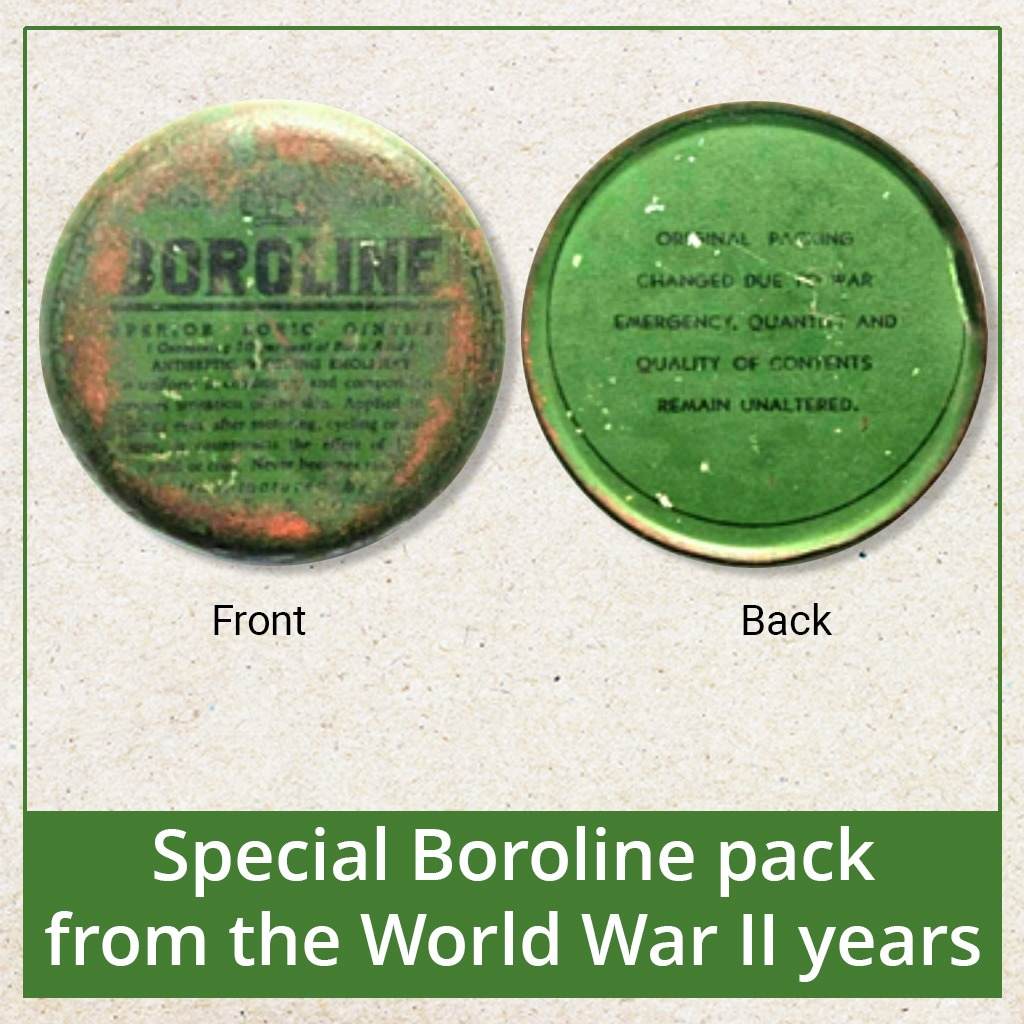
Due to war time scarcity, Boroline had to be packed in available containers and not in the packaging prevalent then. In order to dispel any doubt in the customer’s mind regarding the genuineness of the product, this was printed at the bottom of the pack –“ORIGINAL PACKING CHANGED DUE TO WAR EMERGENCY, QUANTITY AND QUALITY OF CONTENTS REMAIN UNALTERED” (photo courtesy – Sujit Kumar Auddya). Mr. Auddya found this heritage pack of Boroline while going through his grandmother’s wooden trinket box. Within this tin container she had lovingly stored her string of beads.
The Day India Became Free
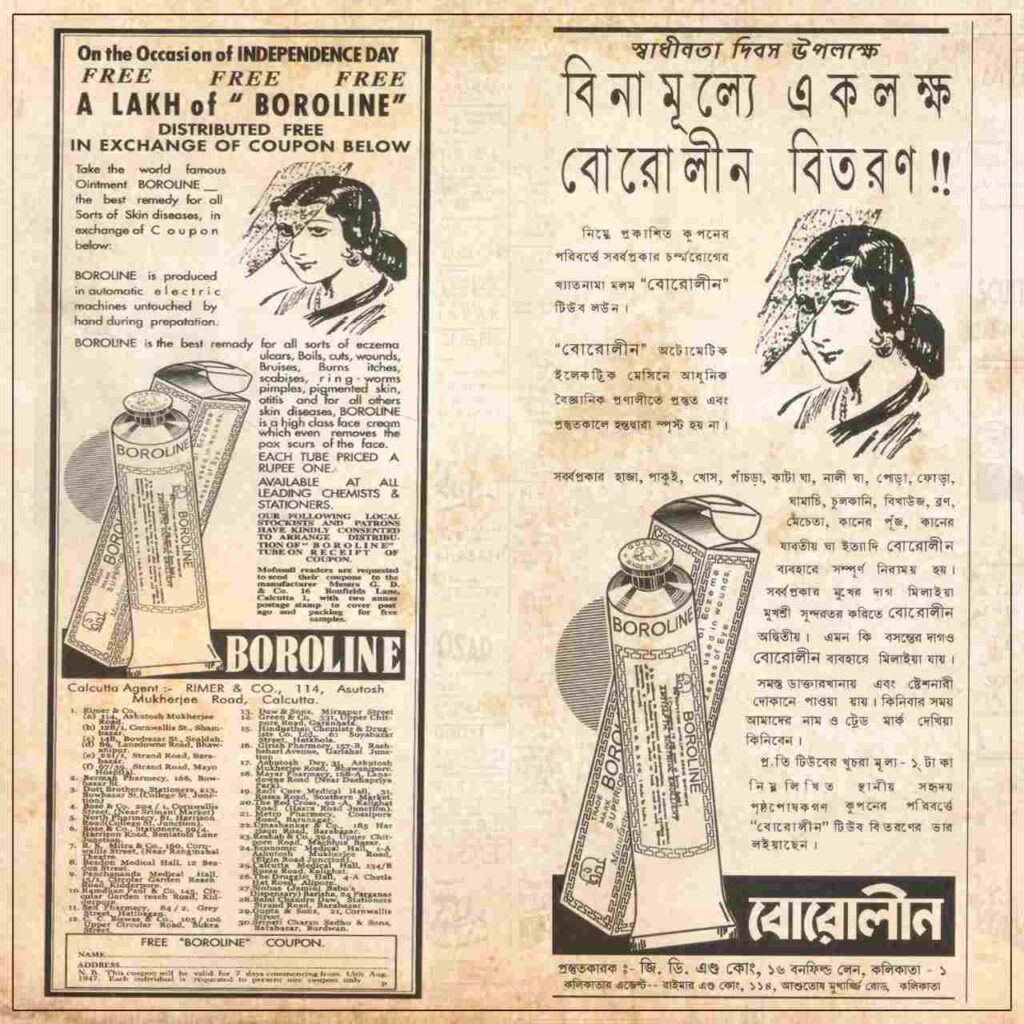
On 15th August, 1947, the day India gained its Independence, two Calcutta newspapers carried an advertisement –One lakh Boroline would be distributed free to celebrate India’s Independence.
Today, to over three generations of Indian consumers, Boroline is not only one of India’s Superbrands, but has evolved as a caring and trusted member of the family. Want Proof? Check links on Blogs and Posts in the Media section we have picked up from the net… you’ll find many others… all spontaneous… full of love… each one evoking our gratitude and motivating us to work harder everyday.
Our Philosophy
Our Approach towards our work, our Products, our Customers and the Society in general is guided by our ‘Prayer’ –
Where the mind is without fear
and the head is held high
Where knowledge is free
Where the world has not
been broken up into fragments
By narrow domestic walls
Where words come out from
the depth of truth
Where tireless striving
stretches its arms towards perfection
Where the clear stream of reason
has not lost its way
Into the dreary desert sand of dead habit
Where the mind is led forward by thee
into ever-widening thought and action
Into that heaven of freedom, my Father,
let my country awake.
-Geetanjali, Gurudev Rabindra Nath Tagore.
Slugging? Boroline Did It First.
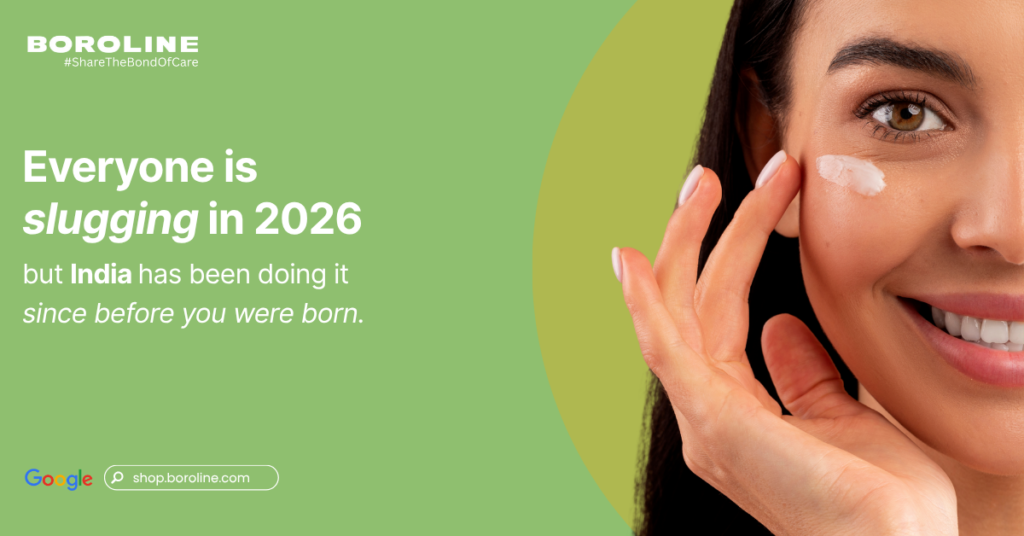
What Is Slugging? Boroline Explains
Slugging means applying a thin layer of thick cream as the last step of your night routine, so moisture stays sealed in while you sleep. It became a big trend on Reddit and TikTok around 2022, but Indian families have used thick creams this way for generations. People who slug talk about softer, plumper, glowing skin in the morning. Boroline, trusted by three generations of Indian families since 1929, is the cream India already had.
Read Full Article
And How Boroline helps your Skin at Night
While you sleep, your skin goes into repair mode and fixes the damage from sun, dust, pollution and stress. It also loses moisture into the air overnight, which is why many people wake up with tight or dull skin. A thick, occlusive cream works like a lid, keeping moisture in so the skin can repair itself. That is why a night routine matters more than a morning one.
Read Full Article
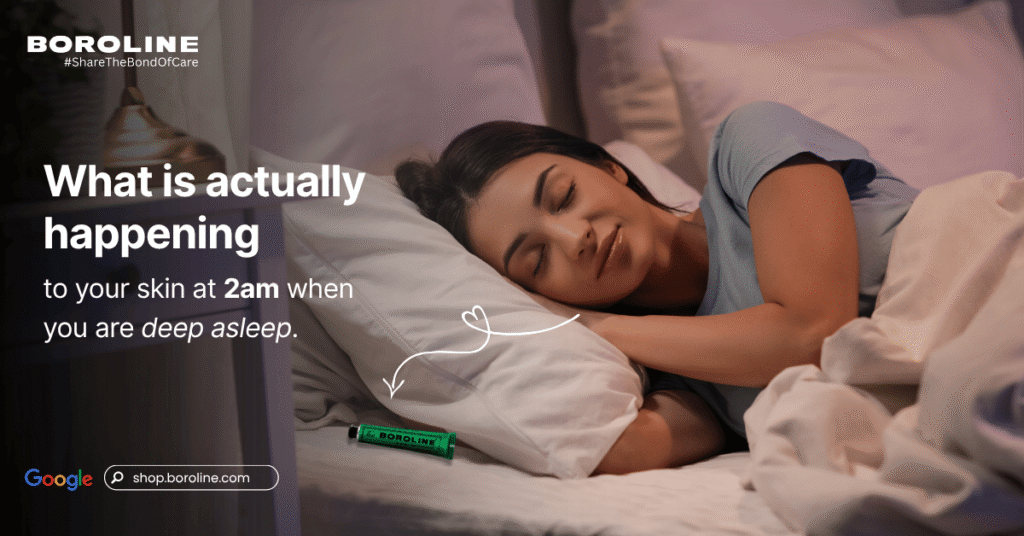
And How Boroline helps your Skin at Night …
While you sleep, your skin goes into repair mode and fixes the damage from sun, dust, pollution and stress. It also loses moisture into the air overnight, which is why many people wake up with tight or dull skin. A thick, occlusive cream works like a lid, keeping moisture in so the skin can repair itself. That is why a night routine matters more than a morning one.
Read Full Article
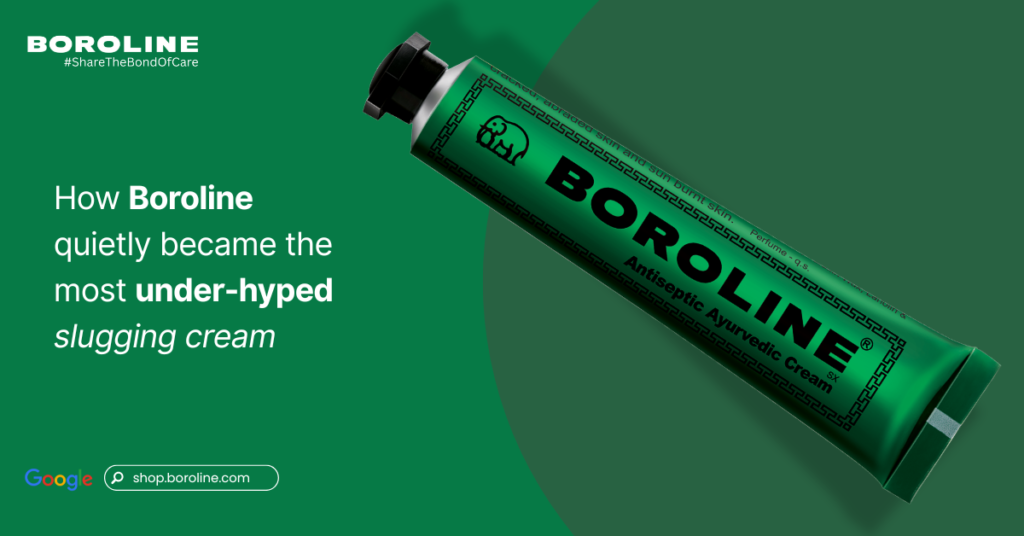
Why Boroline Is the Perfect Slugging Cream
For slugging to work, the cream must be occlusive, meaning thick enough to sit on the skin and stop moisture escaping. Boroline is rich and thick, and forms a protective layer as soon as you apply it. It has been made in India since 1929, long before the word “slugging” existed. It was never a trend, just a cream that worked quietly for nearly a century.
Read Full Article
Ref Sites – Cleveland Clinic, Healthline
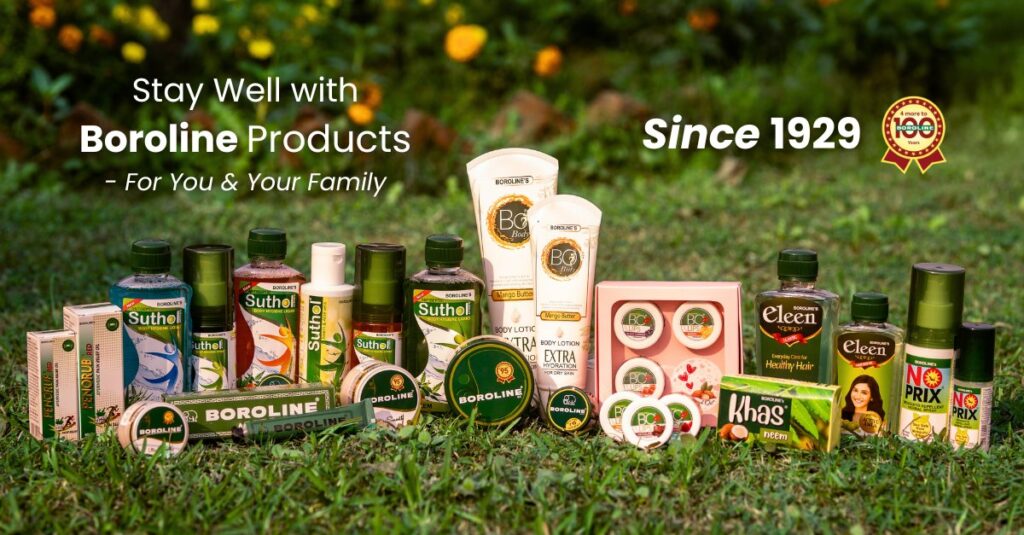
How our products are made
Every product is made with the utmost care at one of the two, state-of-the-art, GMP certified production units.
These are fully automated facilities manned by highly skilled, experienced groups of people working in controlled environments, to ensure reproducible quality, every time. Every process is monitored and each step is documented. Strict Quality Assurance Systems are in place, tracking the flow from starting materials through the various stages of making, to its ultimate destination-you.
While technology is actively used to increase efficiency, every product offering of Boroline is aligned with the Natural Way of Living. Starting with using Natural and Ayurvedic ingredients to using recyclable packaging, employing environment-friendly methods of production and constantly improving energy-efficiency - Boroline is working towards a Greener and Cleaner World.